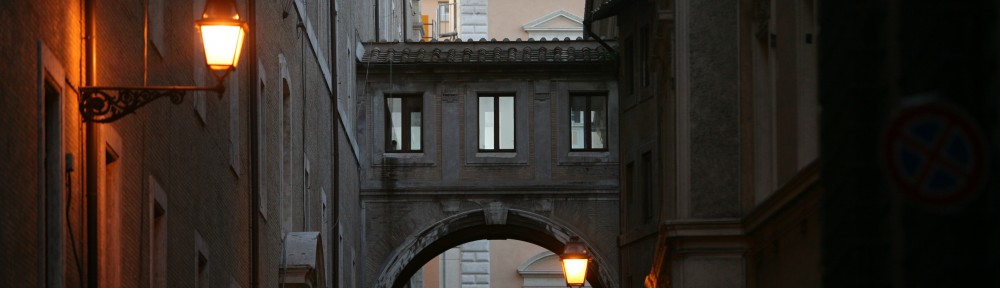
A. Estimates suggest that only about three or four percent of Italian households own a dryer. Most those who do are concentrated in northern Italy where the sun tends to show itself less frequently. In the south, nearly everyone puts clothes on an outdoor clothesline or on an indoor rack when the weather itself goes south.
There’s no getting around that Italy imports most of its electricity. Tumble driers are guzzlers, second only to refrigerators in power drain. Few households even consider their existence.
Even the use of washers is a postwar phenomenon, part of the Italian economic miracle of the late 1950s. Most laundry was done by hand until 1960. Running a fridge and a washer — not to mention the rare dishwasher — is already expensive. But add a drier to the mix and the costs become prohibitive. Why not use the generally temperate weather and sunny days to dry clothes? Italians do.
Resistance to the drier isn’t casual. Here are some facts and details:
Demand is low, making the machines extremely expensive (usually starting at about €1,000 ($1250). There are both gas- and electric-powered models). The German manufacture Bosch has several models in the €900-€1,200 range. The Italian word for drier is asciugatrice. If you find machines in the €300-400 range don’t jump for joy; you’re looking at a lavatrice, a washer.Most Italy driers work on the condenser system, using water to make hot air. A heat exchanger then cools the air and condenses the water vapor into either a drainpipe or a collection tank. The process continues on a loop. But using water also means more humidity and longer drying cycles.On the subject of electricity, most households have a supply of three kilowatts.
Running a washer and drier at the same time will knock out a circuit breaker in a second. Upping your household supply to six kilowatts sends bimonthly or quarterly bills through the roof. (An Italian household equipped with washer, dryer, dishwasher and AC units — par for the course in the United States — might be facing the equivalent of $5,000 in electric costs annually). Ironing clothes is still a centerpiece of wardrobe life. The cleaning process really has three phases: washing, air drying, ironing. Sure, there are Sta-Prest products, but when it comes to elegance and a sharp look there’s no substitute for a well-ironed shirt. Residual dampness in line-hung clothes is for an iron to exterminate. Italians also have no clothesline bans to contend with.
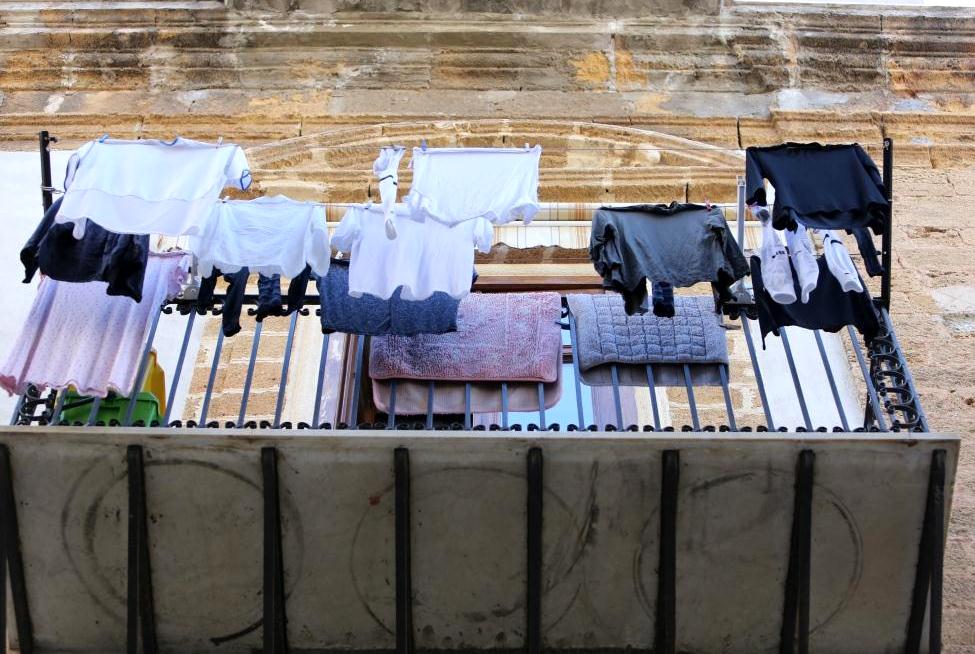
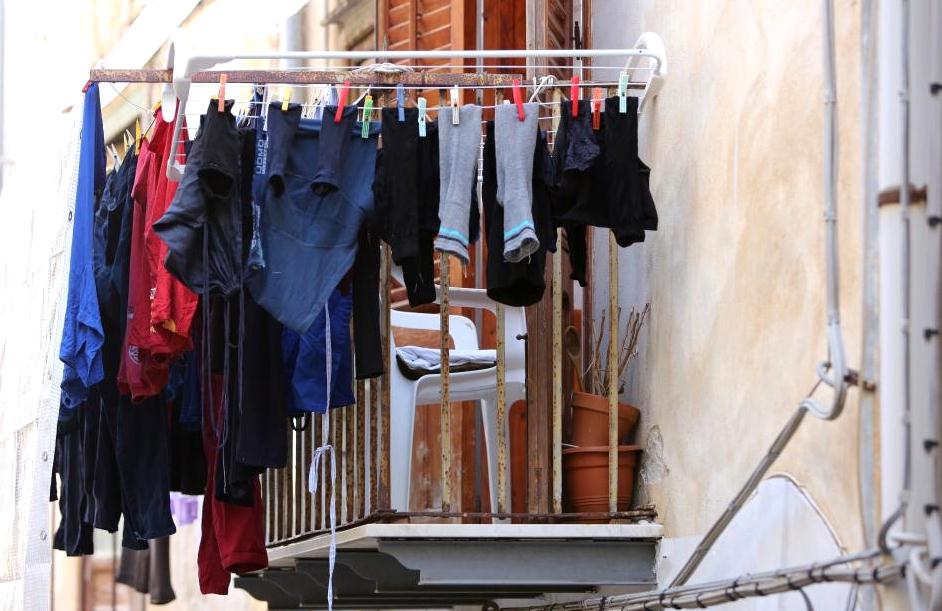
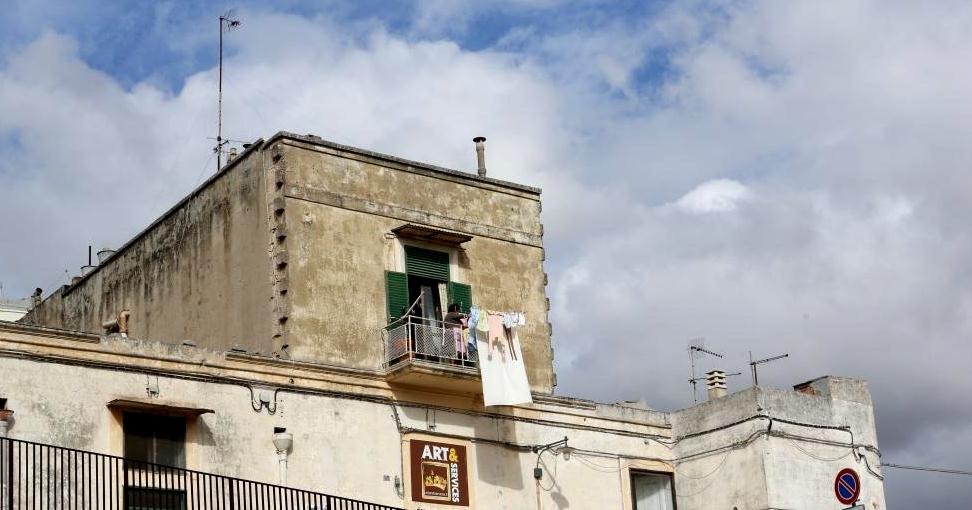
Some 20 percent of American households are located in neighborhoods where bans on laundry lines are in effect. Tell that to an Italian and they’ll scoff. Clothes are hung across terraces, balconies, streets, from the walls of rooms, and even outside windows. The aesthetics of drying are not reviled.
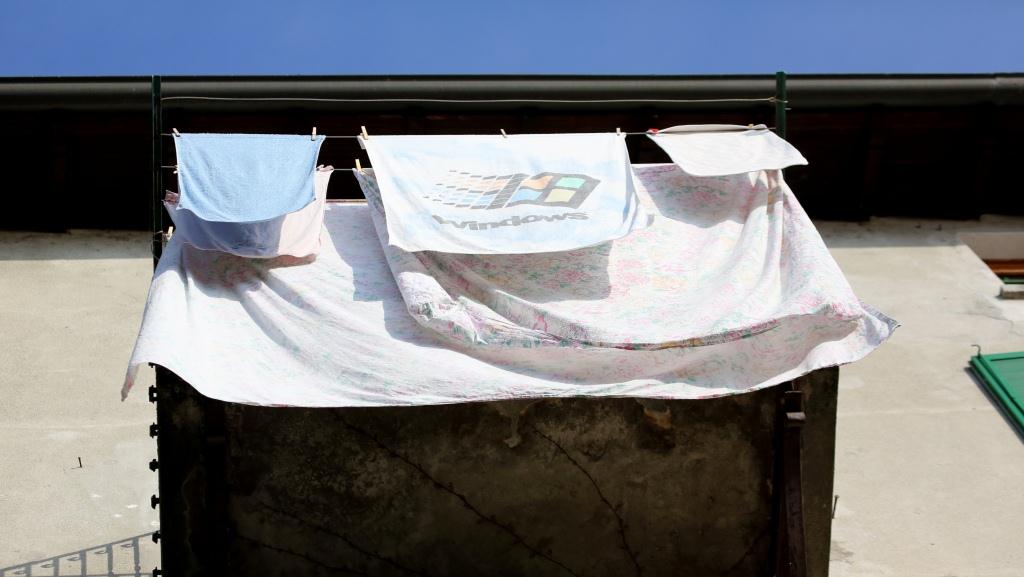
One should always hang your Windows out the windows.
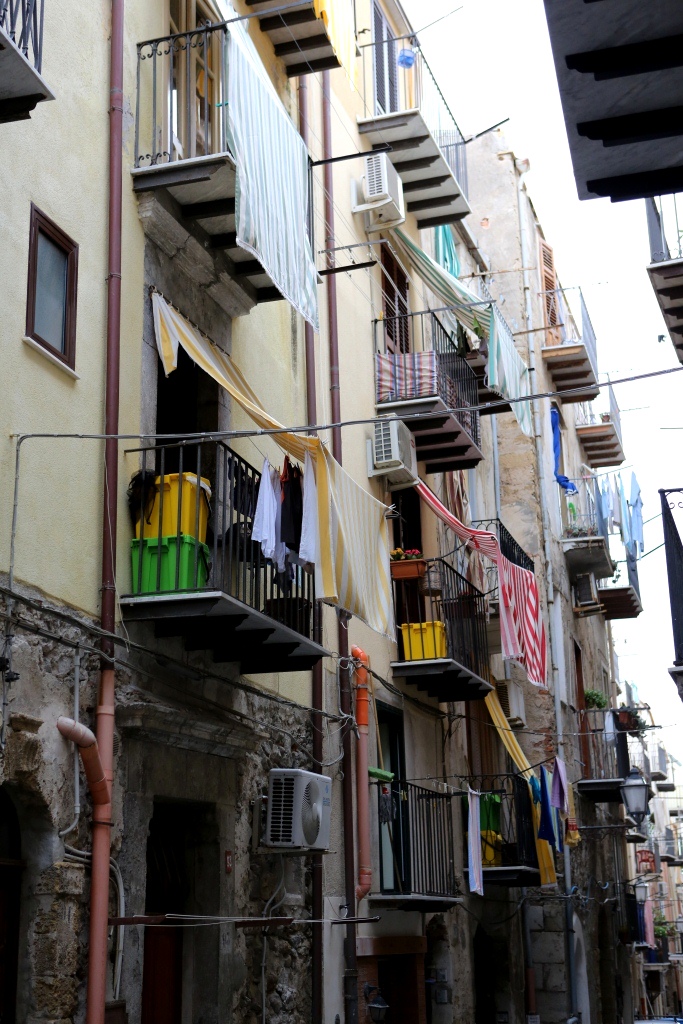
Laundry day is obviously a scheduled neighborhood thing. I will bet that if you do yours on the wrong day the neighbors talk about you. Not nicely either.
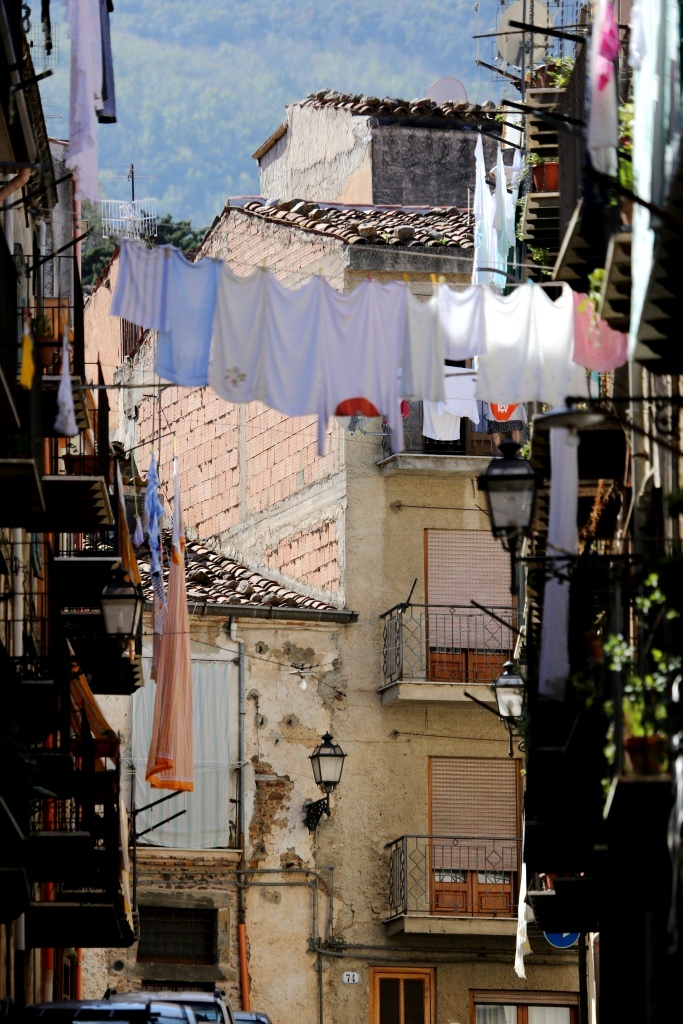
There is always somebody who just can’t get the laundry line directions correct!!
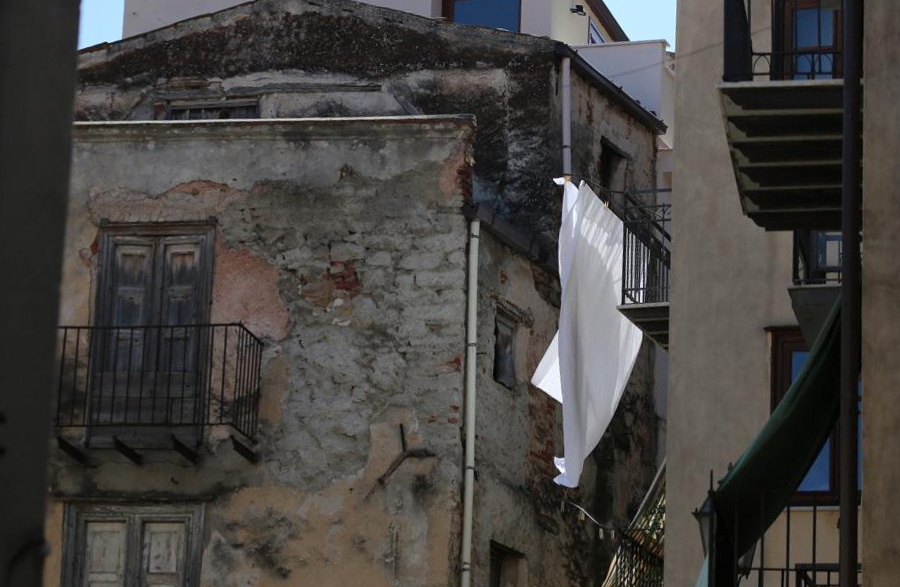
Spinnaker sheets in the breeze.
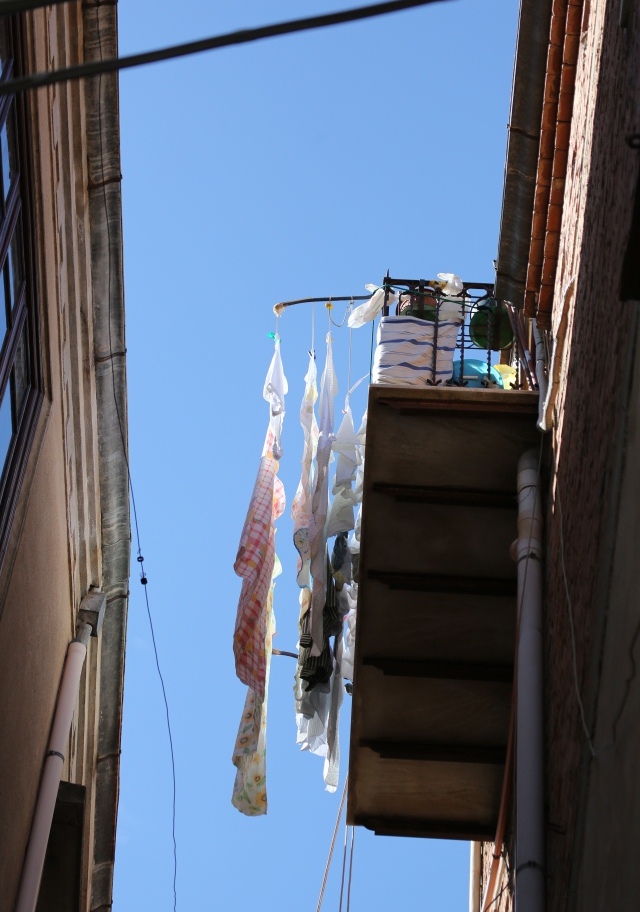
There are not many secrets in these little towns.

.
.
.

Now this is a rare sight! No clothing.
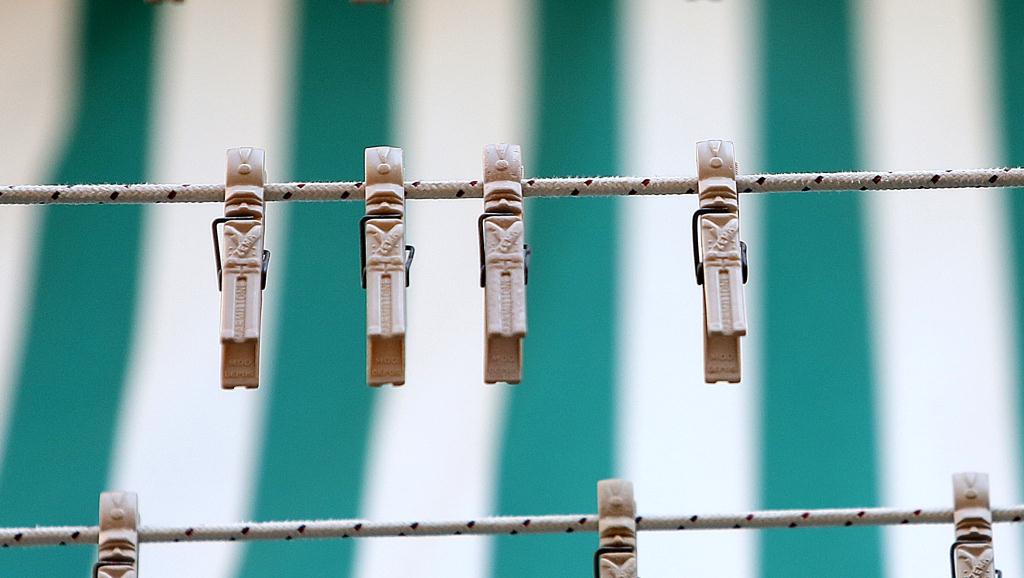
It wasn’t until I was cleaning up the photos that I found out the clothes pins were designed like little soldiers.
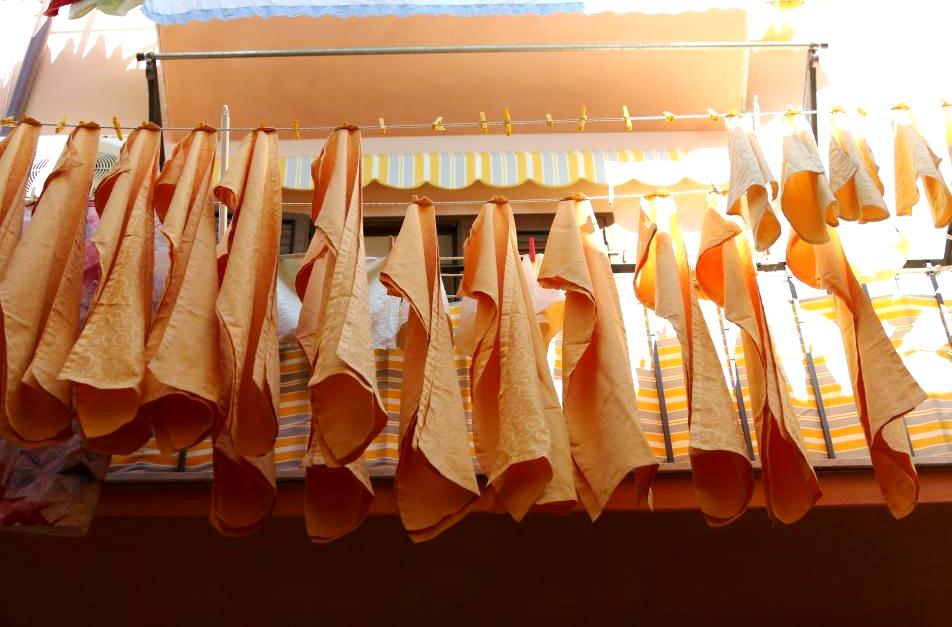
Obviously they own a restaurant in Cefalu`
.
.
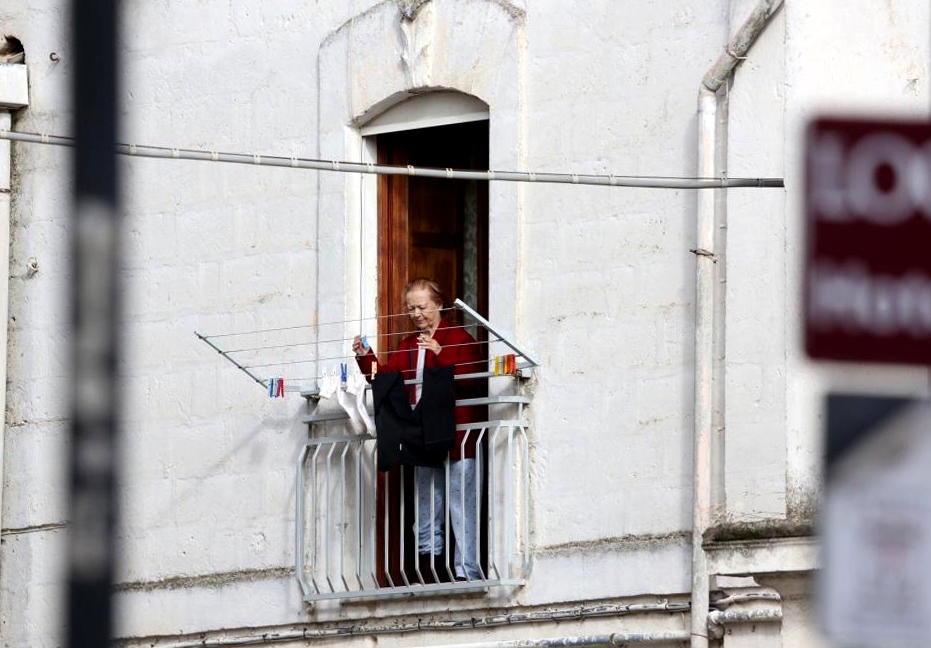
Hard at work.

A little color added in to the mix.
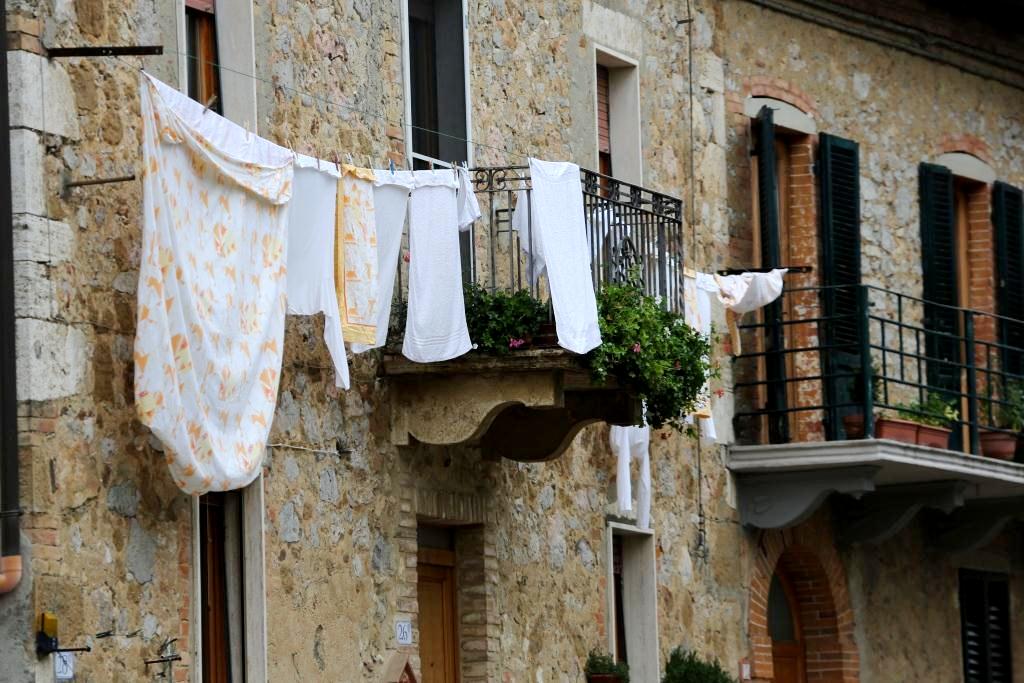
Those must be the Tuscan print design. They match the stone of the house.
Michael, I find myself still going back through your earlier posts just to relive those awesome days in October when we got a taste of the Italian good life. Of course, we got an edited version — the Puzio version — all the spectacular stuff, none of the ordinary stuff. So, thanks to you both, I have a totally unrealistic idea of what life is like over there. Not that I’m complaining — reality is way overrated.
These textured walls just knock me out. Beautiful, beautiful.
Love,
Andy
Love,
Andy